 Sharad Gattu
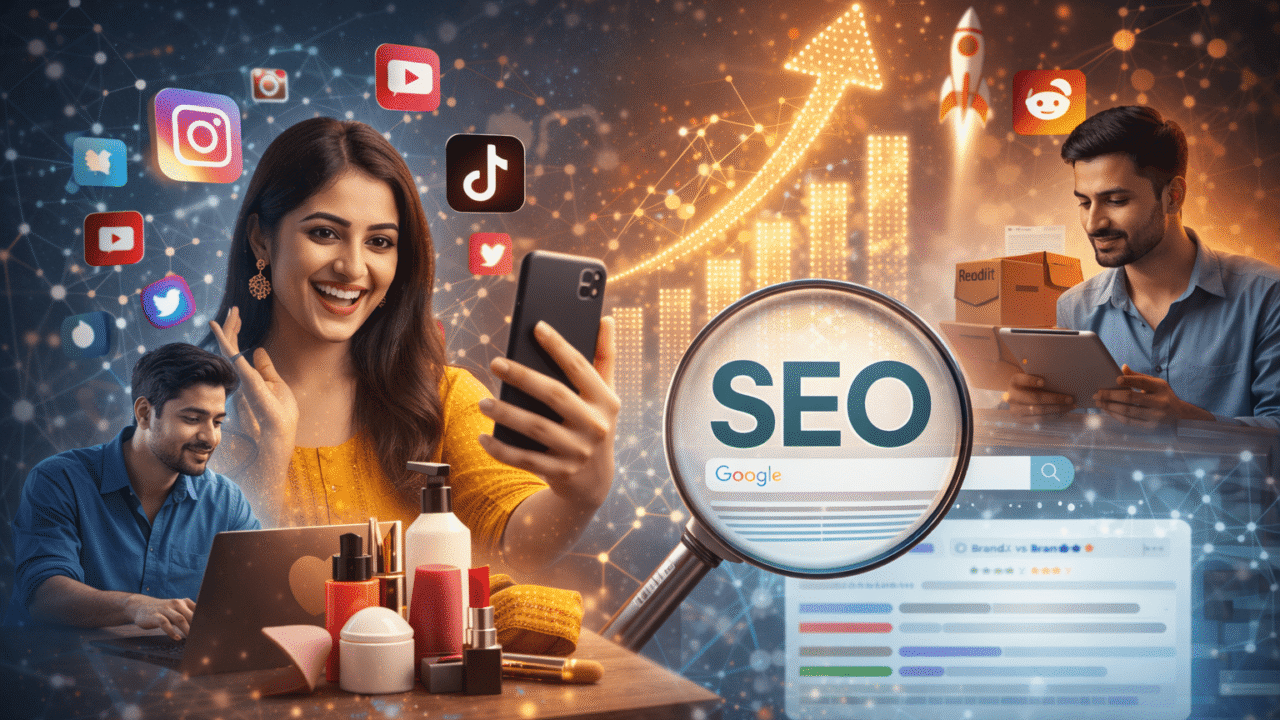
 Influencer marketing and SEO used to live in separate departments, pursue different metrics, and serve different moments in the buyer journey. Today, they overlap in ways that are shaping how people discover brands, how they research products, and how they navigate from awareness to decision.
The shift isn’t cosmetic — it alters the structure of demand, the vocabulary of search queries, and the informational environment that surrounds commercial categories.
For more than a decade, SEO operated on a familiar path: users had a need, typed a query into Google, and evaluated a ranked list of answers. That model still exists, but it’s no longer the default for younger audiences or for high-consideration purchases.
Discovery now begins on TikTok, YouTube, Instagram, Reddit, and Amazon. Google enters the process later, often as a validation layer rather than the starting point.
This reordering matters because influencers occupy those discovery surfaces. They contextualize products, explain use cases, compare workflows, and provide social proof. In doing so, they define the questions users later take into search.
And when enough creators talk about a product or category, they introduce (and normalize) new terminology. SEO teams then see that language show up as long-tail queries, question queries, and branded modifiers.
Influencer marketing creates demand; SEO captures it. A strong creator ecosystem drives branded search growth alongside generic research queries like “[brand] review,” “[brand] vs [competitor],” and “is [brand] worth it.”
These are mid- to high-intent queries that historically emerged from paid and earned media. Now they often originate from creator campaigns.
When brands ignore this relationship, they create leakage. Influencers spark curiosity, but search captures conversion. If a brand doesn’t own its informational layer, competitors and comparison sites gladly collect the benefit.
Influencers excel at social proof — demonstrations, testimonials, lifestyle framing, and peer context. SEO excels at search-proof documentation, pricing, comparisons, FAQs, case studies, and technical scaffolding. Users want both. Modern buyer journeys increasingly include:
This layered process favors brands that can support both dimensions. It also favors content ecosystems rather than isolated pages.
Influencers affect search behavior in ways that matter for long-term organic performance:
Repeated creator exposure drives branded demand. Branded queries are one of the strongest indicators of cross-channel alignment and a leading signal for organic resilience.
Influencers introduce the vocabulary and phrasing users adopt when they research. This affects long-tail patterns, question queries, and informational demand.
Creator content gets shared, embedded, quoted, or referenced across blogs, forums, and editorial roundups. The result resembles link earning rather than link building — slower, more natural, and harder for competitors to replicate.
Visitors who enter via search after creator exposure typically show deeper scroll, better session duration, and stronger intent. Behavioral signals don’t directly “rank” pages, but they correlate with successful user satisfaction, which aligns with how modern search systems evaluate quality.
In many categories — beauty, wellness, SaaS productivity, consumer tech, gaming, and creator tools — Google’s page one already includes influencer content. Comparison videos, product breakdowns, and hands-on tutorials frequently outrank the brands themselves.
This inverts the older model where brands and publishers controlled informational surfaces. Now, creators act as informational intermediaries. If brands don’t participate in that ecosystem, the category narrative evolves without them.
That creates strategic risk: creators set expectations, define alternatives, and highlight perceived strengths and weaknesses long before a user hits a corporate website.
From a practitioner standpoint, the rise of influencer-driven discovery affects keyword research, content planning, and link-building workflows.
Some keyword research points to anthropology. SEO teams look at authors’ comments, queries, and replies to uncover the terms, concerns, and comparisons that people use. This gives you more real questions than keyword tools, which don’t always keep up with how society changes.
Planning stuff is harder. Brands need landing pages, price pages, and manuals, but they also need information that is in the middle of the funnel, such as “how it works,” “use cases,” “alternatives,” and “best for X.” Artists tell stories to solve questions like these.
Making links is more like changing things. Brands don’t look for backlinks on purpose. Instead, they add trustworthy material to the ecosystem and let citations, embeds, and references flourish on their own.
Without meaning to, creators make this happen by producing video formats that last forever, tool breakdowns, and workflow examples that bloggers and journalists use.
It’s easier to keep everything in order when campaigns go through an influencer marketing platform that pulls together discovery, briefs, content assets, and performance.
Brands that see influencer work as part of their SEO infrastructure rather than a separate channel can use platforms to make sure their messages fill in gaps in information, map content to landing pages, and keep track of how their campaign stories relate to branded search or organic performance.
It also helps the SEO and social media teams work together instead of battling over money.
The SEO industry has spent years trying to escape transactional link building in favor of earning citations through expertise and authority. Influencers offer a parallel path: they create informational gravity.
When a creator publishes a detailed breakdown, that content moves across surfaces — embedded in editorial content, quoted in category roundups, shared into communities, and surfaced in YouTube search.
Those secondary movements produce the kind of citations link builders struggle to replicate manually. The key is that the links emerge because the content is useful, not because the outreach was persistent.
Influencer marketing and SEO no longer sit in different corners of the marketing stack. Influencers shape the informational demand that SEO later captures. SEO provides the structured answers that creator-driven audiences look for when validating decisions. The combination produces stronger branded search, healthier mid-funnel research, and a more defensible link profile.
For SEO practitioners, the question is no longer whether influencer marketing affects search, but how to operationalize the overlap. The brands that win will be the ones that treat creators as extensions of their informational ecosystem, not as isolated social campaigns.

The practice of using cold emails for link-building outreach lost its dominance in 2025. The high volume of emails in…
We live in a global economy. No longer do business owners need to be restricted to where they market their…
As search engine ranking criteria continue to get updated frequently and social media algorithms evolve constantly, it…
Don't lose any war! Stay updated with the latest Tools, Tips, and Blog
FreakySEO is all about the list of great tools, tips and tricks to create ideas, strategies and quality content.
Created by Ravi Verma (+91-8076180923)
Leave a Reply